












Related News

17
2026
-
10
Painting Production Line Improves Coating Quality and Manufacturing Efficiency
Author:
Chuangzhi Coating
A reliable painting production line helps manufacturers improve surface quality, maintain consistent coating results, and increase production efficiency. For companies processing steel structures, metal hardware, sheet metal parts, doors, windows, and industrial components, an automated coating system can simplify multiple production stages while reducing repetitive manual work.
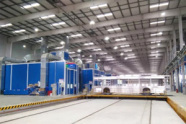
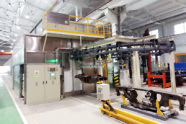
Modern painting lines integrate pretreatment, conveying, spraying, drying, curing, and cooling into a coordinated workflow. The equipment configuration can be customized according to workpiece dimensions, material characteristics, coating requirements, and production capacity. For metal products that require both an attractive appearance and dependable surface protection, a well-designed production line provides a practical solution for large-scale manufacturing.

How an Automated Painting Production Line Works
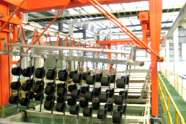
A complete painting production line is designed to move workpieces through each treatment stage in a controlled sequence. The process generally begins with loading and surface cleaning, followed by rinsing, moisture removal, and cooling. These steps prepare the metal surface for subsequent coating operations.
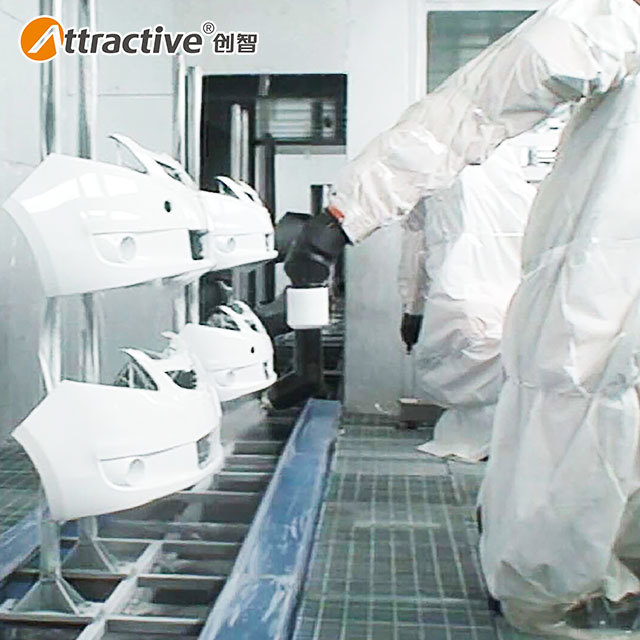
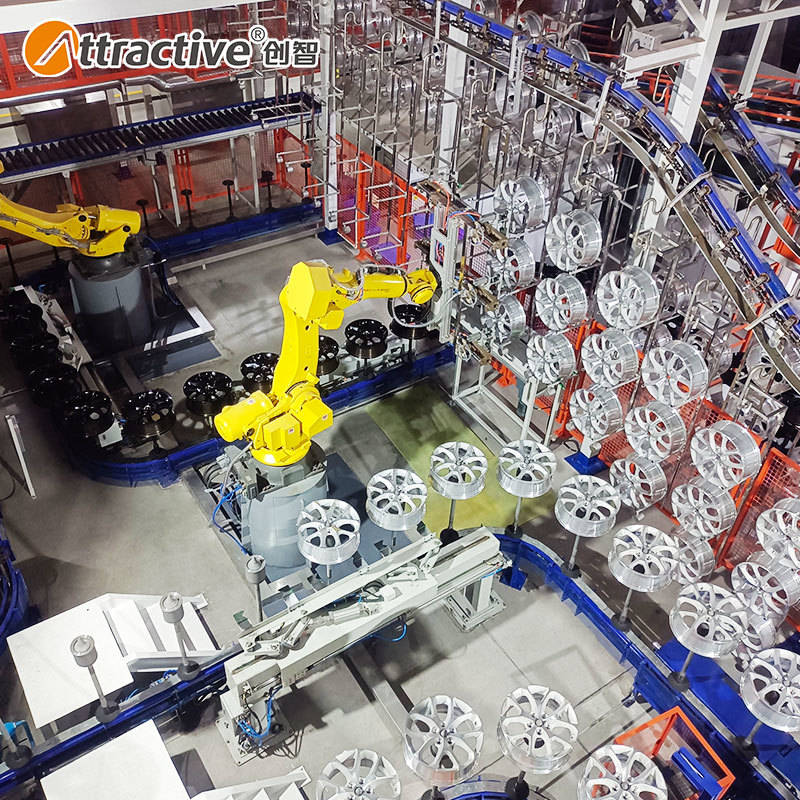
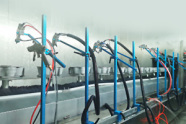
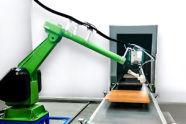
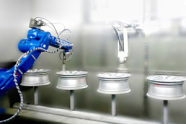
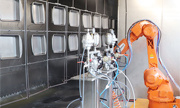
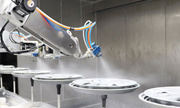
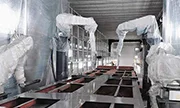
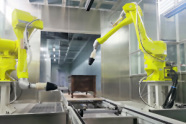
After pretreatment, workpieces enter the spraying area, where the selected coating material is applied. Depending on the product and process requirements, the system may use manual spray guns, reciprocating spray machines, or robotic spraying equipment. Automated conveying helps maintain a stable production rhythm and reduces unnecessary handling between stations.
For metal products using powder coating, electrostatic spraying allows charged powder particles to adhere to grounded workpieces. The coated parts then enter a curing oven, where controlled heating forms a durable coating layer. A cooling stage follows before inspection and unloading.
The exact process depends on the workpiece material, pretreatment method, coating type, and required finish. Integrating these stages into one production system helps manufacturers coordinate material flow and improve overall process consistency.
Key Benefits for Metal Product Manufacturers
Consistent Coating Quality
Uneven coating thickness, missed areas, and inconsistent surface appearance can affect product quality and increase rework. A properly configured painting production line improves consistency by controlling conveyor speed, spray parameters, and curing conditions. Robotic and reciprocating spraying systems can also help maintain repeatable application patterns on suitable workpieces.
Higher Production Efficiency
Automated conveying reduces the need to transfer products manually between individual processes. Multiple workpieces can move through pretreatment, spraying, and curing in a continuous sequence, helping manufacturers manage high-volume orders more efficiently. Production capacity can be adjusted through conveyor speed, hanging intervals, spray equipment configuration, and the number of operating stations.
Improved Corrosion Protection
For steel and galvanized components, appropriate surface preparation and coating application help protect against moisture, oxidation, and other environmental influences. The final performance depends on the substrate, pretreatment quality, coating formulation, and curing conditions. A coordinated production line makes it easier to establish and repeat the required process parameters.
More Efficient Resource Management
A well-planned system can reduce unnecessary handling, improve labor allocation, and support more efficient use of coating materials and energy. Heat recovery, optimized oven operation, and suitable spray equipment may further reduce operating costs. Actual savings depend on the factory layout, production schedule, equipment design, and existing manufacturing processes.

Applications of a Customized Painting Production Line
A customized painting production line can serve a wide range of metal manufacturing industries. Typical applications include steel structures, electrical cabinets, metal furniture, building materials, door and window frames, automotive components, and general hardware products.
For large steel structures, the system needs sufficient conveying capacity, suitable suspension arrangements, and a curing area matched to the workpiece dimensions. For smaller metal hardware, a compact layout with optimized hanging density can help increase throughput while maintaining coating quality.
Manufacturers producing products in different sizes and shapes may benefit from adjustable conveyor speeds and flexible spraying arrangements. The combination of robotic spraying and manual application can also be considered when workpieces contain complex geometries or areas that require additional attention.
Important Factors When Selecting a Painting Line
Before purchasing a painting production line, manufacturers should evaluate several factors rather than focusing only on the initial equipment price.
First, workpiece specifications determine the required conveyor dimensions, loading method, and available clearance. Maximum product length, width, height, and weight should be confirmed during project planning.
Second, the coating process must match the product requirements. Powder coating, liquid painting, and other surface treatment methods require different equipment configurations. Pretreatment and curing conditions should be selected according to the substrate and coating material.
Third, production targets influence conveyor speed, station arrangement, and automation level. Buyers should consider current demand as well as potential changes in product mix and order volume.
Finally, factory conditions must be reviewed, including available floor space, building height, electrical supply, compressed air, heating energy, and environmental control requirements. Careful planning helps avoid costly modifications during installation.
Flexible Equipment Configuration and Technical Support
The metal coating solution featured by Attractivechina is designed for products such as doors, windows, steel cabinets, building materials, and sheet metal components. The referenced configuration includes pretreatment, powder spraying, curing, cooling, and conveying equipment, with a combination of robotic, manual, and reciprocating spraying options.
The published reference parameters include a conveyor speed of approximately 2,000–5,000 mm/min, adjustable according to production requirements, and a maximum suspended workpiece size of approximately 3,000 × 1,000 × 1,800 mm. These specifications are project references rather than universal standards; the final design should be confirmed against the customer's actual products and factory conditions.
Attractivechina also provides customized turnkey coating solutions and technical support. Equipment selection, process layout, and production capacity can be discussed according to specific manufacturing needs.
Conclusion
Choosing the right painting production line is an important step toward improving coating consistency, production efficiency, and long-term manufacturing performance. By integrating surface preparation, spraying, curing, and conveying into a coordinated system, manufacturers can establish a more organized and repeatable finishing process.
A customized solution should balance product dimensions, coating requirements, output targets, energy consumption, and available factory space. Evaluating these factors before equipment selection helps manufacturers identify a suitable configuration for their current operations and future production needs.
Next Page


Contact Us
No.2 Yingbin Avenue, High-tech District, Zhaoqing City, Guangdong Province, China.
Online Message