














Related News

17
2025
-
02
Optimizing Performance: How Non-Stick Coatings Elevate Painting Processes
Author:
Chuangzhi Coating
1. Introduction to Non-Stick Coatings
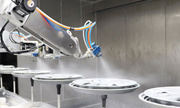
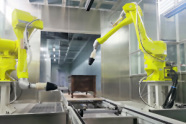
Non-stick paint painting production line have revolutionized the industrial painting landscape, offering solutions that significantly improve efficiency and product quality. These specialized coatings, typically made from materials such as polytetrafluoroethylene (PTFE), silicone, and other polymers, provide a unique surface that prevents paint from adhering unwantedly. The ability to easily release coatings or paints from surfaces has a profound impact on both production and operational costs.
In this article, we will explore the various aspects of non-stick coatings, their benefits, applications, and their role in optimizing painting processes across different industries.

2. Key Benefits of Non-Stick Coatings in Industrial Painting
The integration of non-stick coatings into painting processes offers a myriad of advantages:
2.1 Enhanced Efficiency
Non-stick coatings facilitate a smoother application process, allowing for faster production times. Paint can be applied and removed more effortlessly, reducing the need for intricate cleaning procedures post-application.
2.2 Cost Reduction
By minimizing paint waste and reducing the frequency of maintenance on painting equipment, non-stick coatings lead to significant cost savings. Businesses can enjoy lower operational costs while maximizing output.
2.3 Superior Finish Quality
The non-adhesive properties of these coatings contribute to a flawless finish. This is essential in industries where aesthetic quality is paramount, such as automotive and consumer electronics.
2.4 Extended Equipment Life
Non-stick coatings also protect equipment from corrosion and wear, extending the lifespan of painting machinery and reducing the frequency of repairs or replacements.
3. Applications of Non-Stick Coatings in Various Industries
Non-stick coatings find applications in diverse industries, each benefiting from their unique properties.
3.1 Automotive Industry
In the automotive sector, non-stick coatings are utilized to ensure a smooth application of paints and finishes. They help in achieving consistent color and reducing imperfections, which is critical for vehicle aesthetics.
3.2 Aerospace and Defense
The aerospace industry leverages non-stick coatings for their lightweight and high-performance attributes. These coatings ensure that paint adheres perfectly to aircraft surfaces while providing resistance to extreme conditions.
3.3 Consumer Electronics
In the realm of consumer electronics, non-stick coatings not only improve the manufacturing process but also enhance the product’s durability and resistance to scratches.
3.4 Industrial Equipment
Manufacturers of industrial equipment utilize non-stick coatings to ensure that machinery parts remain clean and functional, reducing downtime caused by paint build-up.

4. How Non-Stick Coatings Enhance Painting Processes
Non-stick coatings are designed to optimize several key processes within the painting workflow:
4.1 Simplified Clean-Up
After painting, the removal of excess materials becomes simpler with non-stick surfaces. This reduces labor intensity and time investment in maintenance tasks.
4.2 Improved Adhesion Control
By controlling adhesion properties, non-stick coatings allow for better management of paint application. This is particularly useful in complex geometries or intricate designs where precision is crucial.
4.3 Temperature Resistance
Many non-stick coatings are resistant to high temperatures, making them suitable for processes that involve heat curing or high-temperature drying. This characteristic preserves the integrity of both the coating and the substrate.
5. Material Compatibility: Non-Stick Coatings and Equipment
Selecting the right non-stick coating is vital for achieving optimal results. Various materials can affect the performance of non-stick coatings:
5.1 Metal Surfaces
Non-stick coatings adhere effectively to metal surfaces, making them ideal for tools and machinery in industrial environments.
5.2 Plastic Components
Certain non-stick coatings are designed specifically for plastic, ensuring compatibility without compromising the material’s properties.
5.3 Composite Materials
The use of non-stick coatings on composite materials can enhance performance while maintaining lightweight characteristics, crucial in aerospace and automotive applications.
6. Environmental Impact of Non-Stick Coatings
As industries increasingly focus on sustainability, the environmental impact of non-stick coatings becomes a central concern.
6.1 Eco-Friendly Formulations
Many modern non-stick coatings are formulated to be environmentally friendly, reducing volatile organic compound (VOC) emissions and promoting safer working conditions.
6.2 Recycling and Disposal
Understanding the disposal and recycling processes for non-stick coatings is essential for manufacturers looking to minimize their ecological footprint.
7. Innovations in Non-Stick Coatings Technology
Technological advancements continue to drive the evolution of non-stick coatings:
7.1 Advanced Polymer Development
Newer polymer formulations exhibit enhanced properties, such as increased durability and resistance to chemicals, expanding the range of applications for non-stick coatings.
7.2 Smart Coatings
Emerging technologies are paving the way for smart coatings that can adapt to environmental conditions, offering further optimization in painting processes.
8. Future Trends in Non-Stick Coatings for Painting Processes
The landscape of non-stick coatings is ever-evolving, with several trends anticipated in the coming years:
8.1 Increased Customization
As industries demand more tailored solutions, the ability to customize non-stick coatings to specific application requirements will become increasingly prevalent.
8.2 Enhanced Durability
Future non-stick coatings will likely focus on longevity and resistance to wear and tear, ensuring they can withstand the rigors of industrial environments.
9. FAQs about Non-Stick Coatings in Industrial Painting
9.1 What are non-stick coatings made from?
Non-stick coatings are typically made from polymers like PTFE, silicone, and other advanced materials that provide their unique non-adhesive properties.
9.2 How do non-stick coatings improve paint application?
By preventing paint adhesion to surfaces that don't require it, non-stick coatings ensure a smoother application process and reduce waste.
9.3 Are non-stick coatings environmentally friendly?
Many modern non-stick coatings are formulated to minimize environmental impact, with low VOC emissions and eco-friendly materials.
9.4 Can non-stick coatings be used on all surfaces?
While non-stick coatings are highly versatile, compatibility varies by material. It’s essential to choose the right coating for each surface type.
9.5 How do I maintain equipment with non-stick coatings?
Maintenance typically involves routine cleaning with non-abrasive materials to preserve the integrity of the coating while ensuring proper functionality.
10. Conclusion
In conclusion, non-stick coatings are transforming painting processes across various industries, providing essential benefits that optimize performance, enhance efficiency, and reduce costs. By understanding the applications, advantages, and innovations associated with these coatings, businesses can make informed decisions that elevate their production processes. As technology advances, the future of non-stick coatings holds promise for even greater enhancements in industrial painting applications, paving the way for more sustainable and efficient manufacturing practices.


Contact Us
No.2 Yingbin Avenue, High-tech District, Zhaoqing City, Guangdong Province, China.
Online Message