

















Related News

04
2025
-
03
Elevate Your Coating Process with Advanced Non-Stick Technology
Author:
Chuangzhi Coating
1. Introduction to Advanced Non-Stick Technology
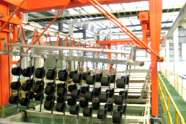
In the modern industrial landscape, coating processes play a pivotal role in enhancing product functionality and durability. Among the various innovations in this field, advanced non-stick paint coating line stands out for its ability to simplify coating applications, reduce waste, and enhance the quality of finished products. This article explores the transformative impact of non-stick technology, emphasizing its significance across diverse industries, from automotive to consumer goods.

2. Benefits of Non-Stick Technology in Coating Processes
The integration of non-stick technology in coating processes yields numerous advantages that contribute to operational efficiency and cost-effectiveness. Below are some key benefits:
2.1 Enhanced Efficiency
Using non-stick coatings drastically reduces the amount of time required for cleanup between production runs. This efficiency not only speeds up the overall process but also minimizes downtime, allowing for increased productivity.
2.2 Reduced Material Waste
Non-stick coatings minimize the likelihood of material adhesion, resulting in fewer defects and less scrap material. This reduction in waste translates to cost savings and a more sustainable manufacturing approach.
2.3 Improved Product Quality
With advanced non-stick technology, products are less likely to suffer from imperfections such as surface blemishes caused by sticking to equipment. The improved finish enhances the aesthetic and functional qualities of the end product.
2.4 Versatility in Application
Non-stick coatings can be applied to a wide range of substrates, including metals, plastics, and ceramics. This versatility makes them suitable for various applications and industries, enabling manufacturers to expand their offerings.
3. Applications of Non-Stick Technology in Various Industries
Non-stick technology is making strides in various sectors, enhancing processes and outcomes.
3.1 Automotive Industry
In the automotive sector, non-stick coatings are applied to components like molds and dies, ensuring that parts are released without damage and improving the overall manufacturing cycle.
3.2 Food Processing
In food processing, non-stick coatings are essential for baking trays, frying pans, and other equipment, allowing for easy release and cleaning, thereby maintaining hygiene standards.
3.3 Electronics Manufacturing
In electronics, non-stick coatings protect sensitive components from harmful chemical interactions during processing, ensuring durability and functionality.
3.4 Aerospace Industry
Aerospace applications utilize advanced non-stick coatings to prevent material buildup on critical components, optimizing performance under demanding conditions.

4. How Advanced Non-Stick Technology Works
Non-stick technology primarily relies on the application of specialized coatings that exhibit low friction coefficients.
4.1 Chemical Composition
Most non-stick coatings are made from polytetrafluoroethylene (PTFE) or similar fluoropolymers. These materials create a smooth surface that resists adhesion from various substances.
4.2 Application Methods
Advanced non-stick coatings can be applied through various methods, including spraying, dipping, and electrostatic application. Each method has its benefits, depending on the substrate and desired coating thickness.
5. Choosing the Right Non-Stick Coating for Your Needs
Selecting the appropriate non-stick coating involves understanding specific requirements of your application.
5.1 Consideration of Temperature Resistance
Different non-stick coatings offer varying degrees of temperature resistance, which is crucial in applications involving high heat, such as those in the food processing and automotive sectors.
5.2 Chemical Compatibility
Evaluate the chemical environment the coating will be exposed to. Choosing a coating that withstands corrosive substances will extend the life of both the coating and the equipment.
5.3 Thickness and Durability
The thickness of the non-stick coating can impact its longevity and performance. A thicker coating may offer better durability but could alter the dimensions of the part being coated.
6. Implementing Advanced Non-Stick Technology in Your Production Line
Integrating non-stick technology into your existing production line requires careful planning and execution.
6.1 Assessing Current Processes
Begin by evaluating your current coating processes to identify areas where non-stick technology can be integrated to improve efficiency and reduce waste.
6.2 Training Staff
Educate your workforce about the benefits and handling of non-stick coatings to ensure successful implementation and optimal results.
6.3 Monitoring Performance
After implementation, closely monitor the performance of non-stick coatings to ensure they meet the desired standards and make adjustments as necessary.
7. Challenges in Non-Stick Technology and How to Overcome Them
Despite its advantages, the adoption of non-stick technology can pose certain challenges.
7.1 Initial Cost Investment
The upfront investment for advanced non-stick coatings can be higher than traditional options. However, the long-term savings in downtime and material waste often justify the expense.
7.2 Surface Preparation Requirements
Proper surface preparation is crucial for adhesion. Manufacturers must invest in equipment and training to ensure surfaces are adequately prepared before applying non-stick coatings.
7.3 Environmental Regulations
Compliance with environmental regulations regarding the manufacturing and disposal of non-stick coatings can be complex. Manufacturers should stay informed about relevant laws and adopt eco-friendly practices where possible.
8. Future Trends in Non-Stick Coating Technology
As technology advances, several trends are emerging in non-stick coating applications.
8.1 Eco-Friendly Coatings
The demand for sustainable practices is driving the development of eco-friendly non-stick coatings that minimize environmental impact while maintaining performance.
8.2 Nanotechnology in Coatings
Nanotechnology is paving the way for the creation of ultra-thin, highly effective non-stick coatings that enhance product performance without adding significant weight or altering dimensions.
8.3 Smart Coatings
Emerging innovations include smart non-stick coatings that can change properties based on environmental conditions, offering enhanced performance across various applications.
9. Frequently Asked Questions
9.1 What industries benefit the most from non-stick technology?
Non-stick technology is particularly beneficial in the automotive, food processing, electronics, and aerospace industries due to its efficiency and quality enhancement.
9.2 How do non-stick coatings improve production efficiency?
Non-stick coatings reduce cleanup time, minimize defects, and decrease material waste, all of which contribute to a more efficient production process.
9.3 Are non-stick coatings environmentally friendly?
Many manufacturers are developing eco-friendly non-stick coatings, which align with sustainability goals without compromising performance.
9.4 How do I select the right non-stick coating for my application?
Consider factors such as temperature resistance, chemical compatibility, and the required thickness and durability of the coating when making your selection.
9.5 What are the maintenance requirements for non-stick coated equipment?
Regular inspections and appropriate cleaning practices are essential to maintain the integrity of non-stick coatings and prolong their lifespan.
10. Conclusion
Advanced non-stick technology is revolutionizing the coating processes across various industries, offering significant advantages in efficiency, quality, and sustainability. By understanding the benefits, applications, and implementation strategies associated with non-stick coatings, manufacturers can elevate their operations and remain competitive in a rapidly evolving market. Embracing this technology not only enhances product quality but also establishes a foundation for future innovation and growth within the industry.
SEO:


Contact Us
No.2 Yingbin Avenue, High-tech District, Zhaoqing City, Guangdong Province, China.
Online Message