










Related News

10
2026
-
02
How to Systematically Reduce Paint Consumption and Operating Costs of Your Coating Line: An Analysis of Seven Core Strategies
Author:
Chuangzhi Coating
In the era of refined management in manufacturing, the coating line has transformed from a mere production step into a key cost center affecting corporate profitability. Paint consumption, energy costs, labor, and maintenance expenses together form the main body of coating line operating costs. Faced with raw material price fluctuations and environmental pressures, passive saving is no longer sufficient. Only by proactively implementing systematic cost-reduction strategies can cost pressures be converted into competitive advantages. This article will provide a clear action roadmap for enterprises by deeply analyzing seven core strategies to reduce paint consumption and operating costs.

I. Core Strategy: Revolution at the Source — Spray Technology Upgrade
The most fundamental way to reduce consumption is to improve material utilization. The transfer efficiency of traditional manual air spray is only 30%-50%, meaning over half of the paint becomes waste. Technology upgrade is the "first principle" of cost reduction:
- Comprehensive Application of Electrostatic Spray Technology: This is the cornerstone of a modern high-efficiency coating production line. By imparting an electrostatic charge to paint particles, causing them to be efficiently attracted to grounded workpieces, liquid paint utilization can be increased to 70-90%, and powder coatings to over 95%. This is the most direct method with the fastest return on investment for reducing unit consumption.
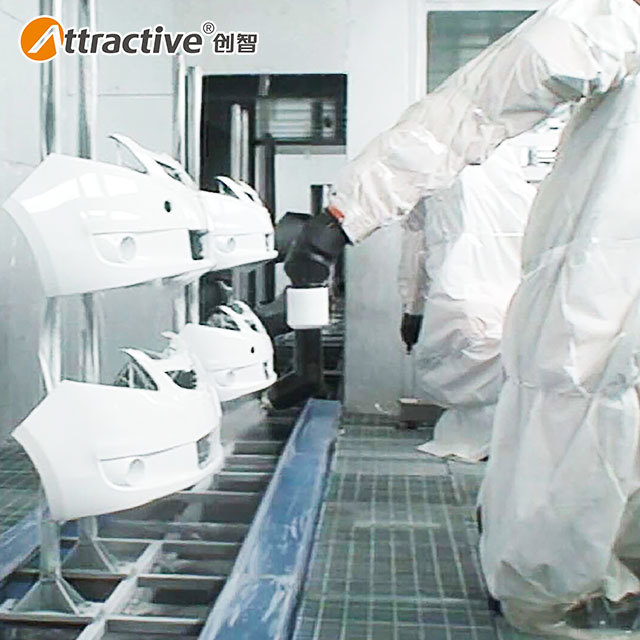
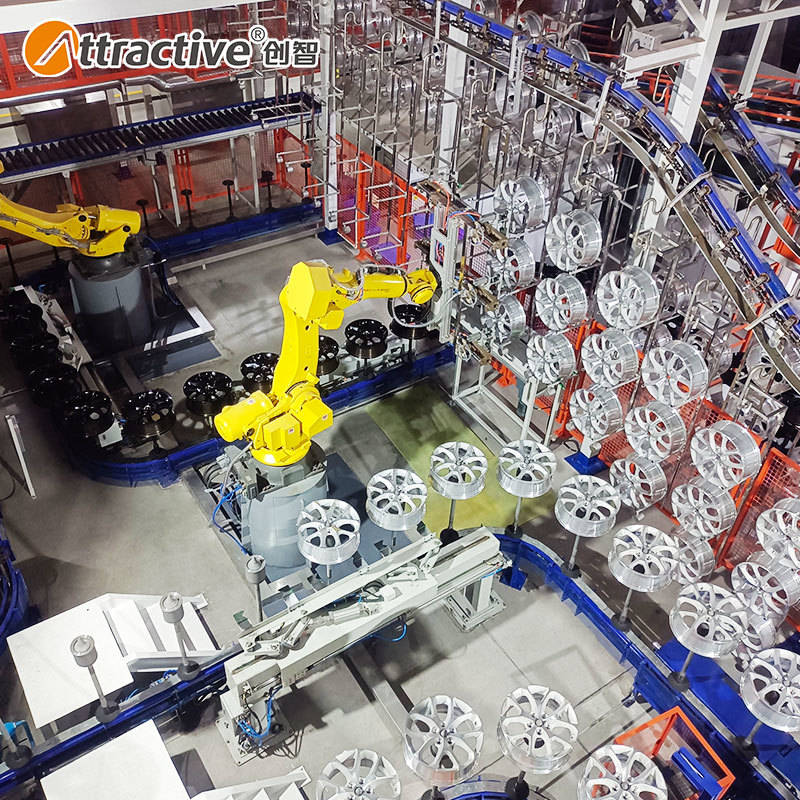
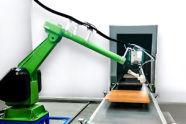
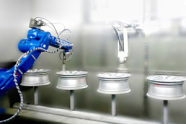
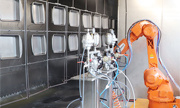
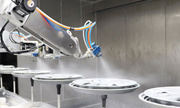
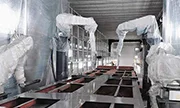
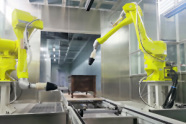
- Deployment of Robotic Automated Spraying Systems: The trajectory, speed, and flow rate of manual spraying are difficult to keep consistently stable, leading to overspray and unevenness. Painting robots, with their millimeter-level repeatability and optimal path planning, ensure uniform coverage on complex surfaces, avoiding waste from human variability. In large-scale production, robotic systems are the core equipment for achieving the goal of reduced coating line operating costs.
II. Process Refinement: Extracting Efficiency from Process Management
Within a given technical framework, refined process control can uncover significant hidden benefits.
- Implement Precise Film Thickness Control: Coating thickness is the balance point between cost and performance. By deploying online film thickness gauges and linking them with the spray system, real-time feedback and closed-loop control can be achieved. Stabilizing the average film thickness at the lower limit of the specification range can save 10%-20% of paint for every 10-15 microns reduced, while ensuring performance standards are met.
- Optimize Key Process Parameter Clusters:
- Paint Parameters: Constant temperature control of paint viscosity ensures optimal atomization, reducing defects like sagging or dry spray caused by improper viscosity.
- Air System: Ensuring compressed air is clean, dry, and at stable pressure is a prerequisite for high-quality spraying, significantly reducing defects and rework.
- Curing Energy: Enhancing oven insulation and installing heat recovery units to use exhaust heat for preheating fresh air or pre-treatment drying can reduce energy consumption by 20%-40%.
III. System Leak Plugging: Strengthening Equipment Management and Recovery
Paint not effectively used and energy not managed are like "sand flowing through an hourglass" from corporate profits.
- Establish an Efficient Paint Recovery and Recycling System:For powder coating lines, configure high-efficiency filter cartridge or cyclone recovery systems, achieving recovery rates over 99% for near-zero waste. For solvent-based paints, efficient dry (limestone powder) or wet overspray treatment systems meet environmental requirements while also reducing system maintenance burden and potential material loss.
- Implement Total Productive Maintenance and Preventive Maintenance: Establish strict equipment inspection and maintenance routines. A pump with a leaking seal or a gun with poor atomization can cause cumulative waste far beyond expectation. Regular maintenance not only saves paint but also ensures production stability and reduces unplanned downtime losses.
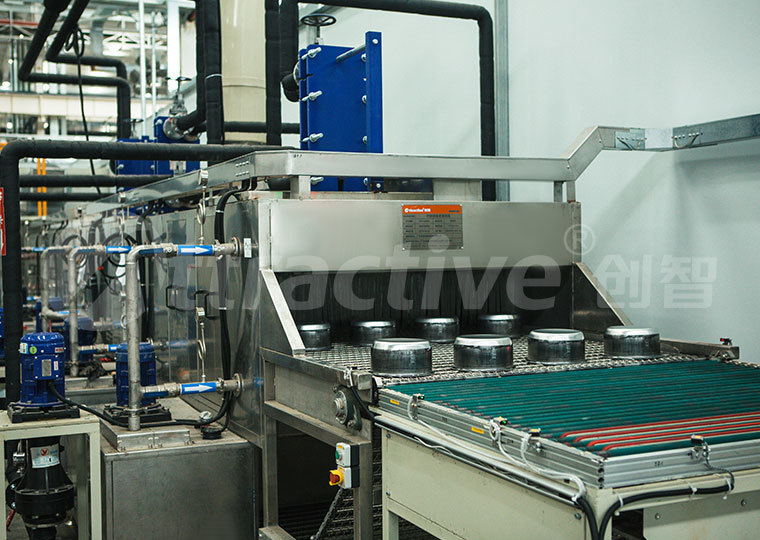
IV. Intelligent Enablement: The New Era of Data-Driven Cost Control
- Build an Intelligent Coating System and Digital Management Platform: This is the ultimate means for achieving continuous optimization and proactive management. By collecting full-process data (paint flow, pressure, temperature, energy consumption, equipment status) via IoT sensors and integrating it into an Intelligent Coating System, enterprises can:
- Achieve Transparent Monitoring and Real-Time Alerts: Any parameter deviation triggers immediate alerts, preventing batch waste.
- Conduct Deep Data Analysis and Model Optimization: Use historical data to build consumption models, employ AI algorithms to find the optimal process window, and predict equipment failures for predictive maintenance.
- Attain Precise Cost Accounting and Traceability: Accurately track paint and energy consumption for each workpiece and production order, providing an indisputable data foundation for refined management, cost assessment, and continuous improvement.
Conclusion: Transforming Cost Reduction and Efficiency Gains into Core Competitiveness
Reducing paint consumption and operating costs in a coating line is far from simply "using less." It is a systematic transformation involving technology, process, management, and mindset. Enterprises should establish a three-dimensional framework: "Control the source through technology upgrade, improve efficiency through process optimization, and ensure sustainability through intelligent management."
It is recommended that enterprises start with a cost audit to identify the biggest waste points and develop a phased, quantifiable improvement roadmap. For existing lines, prioritize process parameter optimization and preventive maintenance. For new builds or major retrofits, robotic automation, electrostatic spraying, heat recovery, and the Intelligent Coating System must be planned as core standards.
Ultimately, a systematically optimized, cost-controlled high-efficiency coating production line is not only a business card for green manufacturing but also a competitive moat built in an era of thin margins, combining advantages in quality, efficiency, and cost. Investing in systematic cost reduction is an investment in a sustainable future for the enterprise.


Contact Us
No.2 Yingbin Avenue, High-tech District, Zhaoqing City, Guangdong Province, China.
Online Message