Powder Coating Line vs. Liquid Coating Line: Which is Better?
Author:
Chuangzhi Coating
In the selection decision of coating lines, the choice between powder coating and liquid coating is a classic dilemma. Both technologies have their own strengths: powder coating is known for environmental friendliness, high efficiency, and durability; liquid coating excels in rich appearance, thin and fine coatings, and wide substrate applicability. There is no absolute "better," only "more suitable." This article systematically compares powder coating lines and liquid coating linesfrom multiple dimensions including process principles, cost structure, coating performance, and environmental compliance, helping you make a scientific investment decision.
I. Powder Coating Line: Advantages and Limitations
1.1 Working Principle of Powder Coating Line
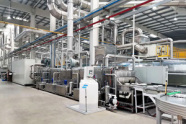
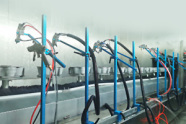
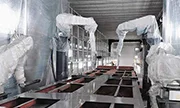
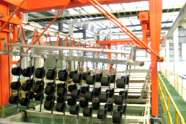
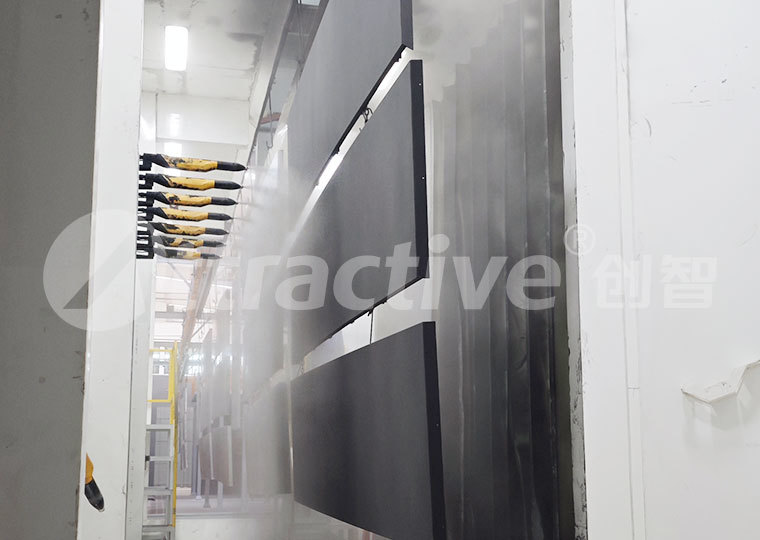
Powder coating uses the electrostatic spraying principle, where charged powder particles are attracted to grounded workpiece surfaces and then cured at high temperatures to form a dense coating. A typical powder coating line includes: pre-treatment tunnel, spray booth with recovery system, electrostatic spray guns, curing oven, and conveyor system.
1.2 Core Advantages
Excellent Environmental Performance: Powder coatings contain no solvents, VOC emissions are near zero, meeting the strictest environmental regulations without exhaust treatment equipment.
Extremely High Material Utilization: Overspray powder can be recovered and reused, achieving overall utilization rates exceeding 95%, significantly reducing material costs.
Superior Mechanical Properties: Thick coatings (60-120μm) with outstanding wear resistance, impact resistance, and corrosion resistance.
One-Coat Application: No primer required; single spraying achieves required thickness, simplifying the process.
Rich Colors and Textures: Offers high gloss, matte, metallic, sand texture, wrinkle, wood grain, and many other effects.
1.3 Limitations and Challenges
Relatively Thick Coating: Minimum film thickness is typically no less than 40-50μm, unsuitable for precision parts requiring thin coatings.
Longer Color Change Time: Powder color change requires cleaning the booth and recovery system, typically taking 15-30 minutes.
Workpiece Temperature Resistance Requirements: Curing temperature typically requires 180-220°C, not suitable for heat-sensitive substrates such as plastics and wood.
Edge Coverage Challenges: Faraday cage effects may cause thin coating in deep cavities and inside corners.
II. Liquid Coating Line: Advantages and Limitations
2.1 Working Principle of Liquid Coating Line
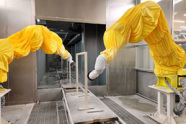
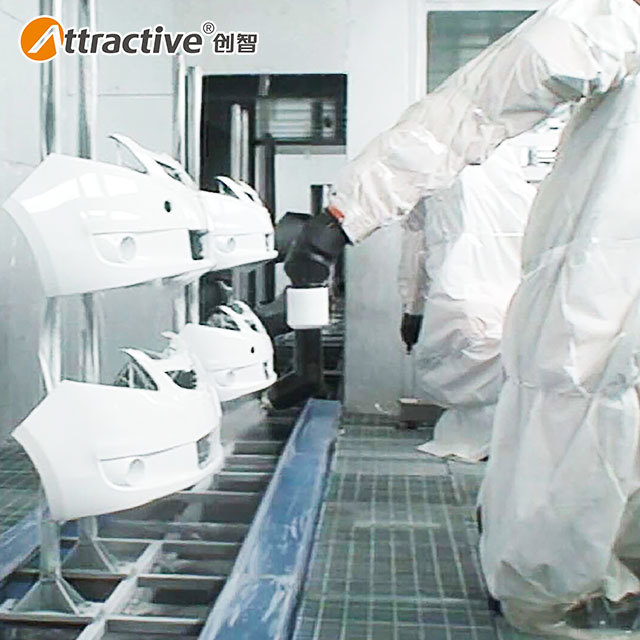
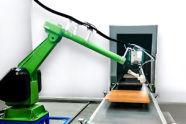
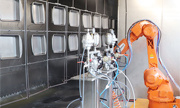
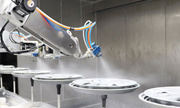
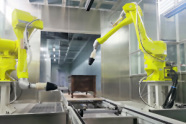
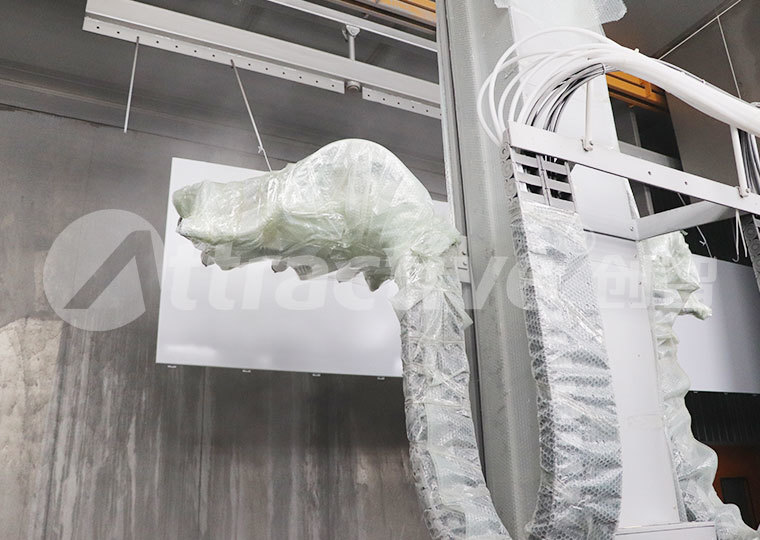
Liquid coating atomizes liquid coatings through air spraying, airless spraying, or electrostatic rotary bells, applying them to workpiece surfaces, then forming a coating through leveling and curing. A typical automated coating line for liquid coating includes: pre-treatment, spray booth (water curtain or dry type), paint supply system, spraying equipment (robots or reciprocators), flash-off zone, and curing oven.
2.2 Core Advantages
Thin and Fine Coatings: Film thickness can be controlled at 20-60μm, suitable for precision parts and high-appearance products.
Excellent Appearance: Achieves high mirror gloss, metallic sparkle, pearlescent, and other complex effects with good leveling.
Wide Substrate Applicability: Can spray metal, plastic, wood, glass, ceramics, and many other materials; curing temperature can be low-temperature or UV.
Quick and Flexible Color Change: Automatic color change systems can switch colors within 2-5 minutes, suitable for high-mix, low-volume production.
Special Functional Coatings: Easily achieves special functions such as conductivity, insulation, high-temperature resistance, and self-healing.
2.3 Limitations and Challenges
Higher VOC Emissions: Solvent-based coatings have high VOC content, requiring exhaust treatment equipment such as RTO.
Lower Material Utilization: Conventional air spray utilization is only 30-50%; even electrostatic spraying rarely exceeds 80%.
Relatively Weaker Coating Performance: At equivalent thickness, hardness and wear resistance are generally lower than powder coatings.
Multi-Layer Process: Typically requires primer + basecoat + clearcoat multi-layer systems, making the process complex.
Solvent Cost and Safety: Solvent procurement costs are high, with risks of fire and explosion.
III. Multi-Dimensional Comparison: A Table to Understand Differences
Comparison Dimension
Powder Coating Line
Liquid Coating Line
Initial Investment
Medium ($200k-600k)
Medium-High ($300k-800k, including RTO)
Coating Utilization
>95%
50-80%
Per-Piece Material Cost
Lower
Higher
Energy Consumption
Higher (high curing temperature)
Medium (can be low-temperature cured)
Color Change Time
15-30 minutes
2-5 minutes
Coating Thickness
60-120μm
20-60μm
Appearance
Rich, but high gloss slightly inferior
Excellent, can achieve mirror finish
Mechanical Properties
Excellent (hardness, wear resistance)
Good
Corrosion Resistance
Excellent
Good (requires multi-layer)
Substrate Limitations
Only heat-resistant materials
Almost unlimited
VOC Emissions
Near zero
Higher (requires treatment)
Suitable Batch Size
High volume, low mix
Low volume, high mix
Typical Applications
Appliances, aluminum profiles, wheels, railings
Automotive bodies, 3C, wood products, plastics
IV. How to Choose: Key Decision Factors
4.1 Product Substrate and Temperature Resistance
If the product is metal and can withstand 200°C high temperature → Both powder and liquid are acceptable
If the product is plastic, wood, or composite → Must choose liquid coating (or low-temperature cure powder, but fewer options)
4.2 Coating Thickness and Appearance Requirements
Need thin coating (<50μm) or ultra-high gloss mirror finish → Liquid coating
Need thick coating, wear/corrosion resistance, sand/wrinkle textures → Powder coating
4.3 Output and Product Variety
High volume, low mix, few color changes → Powder coating line is more efficient and cost-effective
Low volume, high mix, frequent color changes → Liquid coating line is more flexible
4.4 Environmental Regulations
Located in areas with strict VOC limits and do not want to invest in RTO → Powder coating is the first choice
Already have exhaust treatment facilities or can use waterborne paints → Liquid coating can also comply
4.5 Budget and Return on Investment
Limited initial capital, want quick payback → Powder line has lower investment and significant operating cost savings
Pursuing high-end appearance and flexible production → Liquid line has higher initial investment but can bring higher product premiums
V. Hybrid Solutions: Synergy of Both Processes
More and more advanced coating lines adopt "powder + liquid" hybrid processes to leverage the advantages of each. Examples include:
Automotive Body: E-coat primer (liquid) + surfacer/basecoat/clearcoat (liquid), but some components use powder
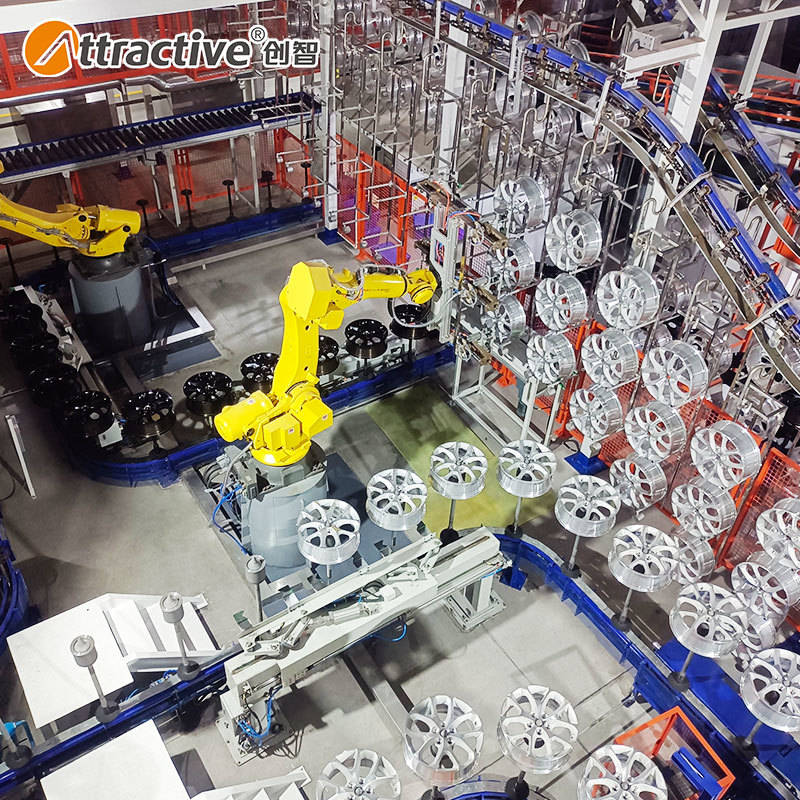
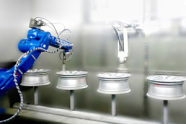
Aluminum Alloy Wheels: Base powder + color paint (liquid) + clear powder
Construction Machinery: Zinc-rich primer (liquid) + powder topcoat
This customized coating solution balances corrosion protection, appearance, and environmental friendliness, representing a trend in high-end manufacturing.
VI. Conclusion: No Absolute Best, Only the Most Suitable
Powder coating lines and liquid coating lines each have irreplaceable advantages. Powder lines are synonymous with environmental friendliness, efficiency, and durability, suitable for high-volume metal workpieces; liquid lines represent appearance, flexibility, and precision, suitable for multi-material, high-appearance products.
Before making a choice, we recommend you:
Clarify product substrate, coating performance requirements, and annual output
Calculate total cost of ownership (initial investment + 5-year operating costs)
Commission process validation tests from professional suppliers
Consider future product expansion, flexibility should be reserved for process switching
Whichever technology route you choose, partnering with experienced coating line equipment manufacturers to obtain efficient coating solutions tailored to your products is key to ensuring investment success. If you need to accommodate both processes simultaneously, consider a flexible coating line design enabling quick switching between powder and liquid.