














Related News
27
2026
-
04
Unveiling the Process Behind the Rice Cooker Liner Coating Line
Author:
Chuangzhi Coating
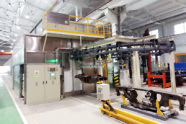
As a staple kitchen appliance, the rice cooker relies heavily on the performance of its inner pot; the inner pot's coating, in particular, is the critical factor determining its non-stick properties, wear resistance, and safety. The "rice cooker liner coating line" is a precision manufacturing system that integrates pre-treatment, spraying, curing, and inspection processes; the technical sophistication of this line directly dictates the quality of the final product.
Prior to coating application, the inner pot substrate—typically made of aluminum alloy or stainless steel—undergoes rigorous pre-treatment. This primarily involves degreasing, oil removal, cleaning, and surface roughening. Through chemical or mechanical means, surface oils and oxide layers are removed to create a uniform microscopic structure on the substrate surface, thereby enhancing coating adhesion. This stage serves as the fundamental basis for ensuring the coating remains firmly bonded and does not peel off.

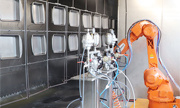
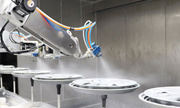
Once pre-treatment is complete, the production line proceeds to apply the primer coat. The primer acts as a transitional layer between the substrate and the functional coating, serving to boost overall bonding strength. During the spraying process, strict control over spray gun pressure, paint viscosity, and spraying distance is essential to ensure coating uniformity and prevent defects such as sagging or uneven thickness.
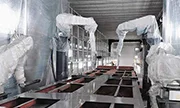
The functional coating typically utilizes polytetrafluoroethylene (PTFE) or ceramic-based systems, applied through a multi-layer spraying process. This stage demands extremely precise process control, encompassing environmental cleanliness, spraying uniformity, and coating thickness regulation. The multi-layer structural design not only enhances non-stick performance but also improves resistance to scratching and high temperatures.
Upon completion of the spraying phase, the inner pots enter a high-temperature curing oven for thermal treatment. By precisely controlling the temperature profile, the coating material undergoes full cross-linking and curing, forming a stable, dense film structure. The curing process significantly influences not only the coating's hardness but also its long-term performance and stability during use.
Following the curing process, rigorous quality inspections are conducted, including visual checks, thickness measurements, adhesion tests, and non-stick performance evaluations. Some high-end production lines also incorporate automated inspection systems to boost efficiency and consistency while minimizing human error.
The rice cooker liner coating line represents a highly integrated and sophisticated manufacturing system, wherein every single process stage exerts a significant influence on the final product's performance. By continuously optimizing the pretreatment, spraying, and curing processes, product quality and user experience can be effectively enhanced, enabling rice cooker inner pots to meet higher standards in terms of both durability and safety.


Contact Us
No.2 Yingbin Avenue, High-tech District, Zhaoqing City, Guangdong Province, China.
Online Message